Call us
Danbury, CT
Greenwich, CT
Naples, FL
Springfield, NJ
Call us
Danbury, CT
Greenwich, CT
Naples, FL
Springfield, NJ
TMS and ECT both treat depression by changing activity in the brain, but they work in very different ways and suit different situations. Transcranial magnetic stimulation, or TMS, uses focused magnetic pulses while you sit awake in a chair. You can drive yourself home and return to work the same day. Electroconvulsive therapy, or ECT, uses a brief electrical current under general anesthesia to trigger a short, controlled seizure. ECT tends to work faster and is usually reserved for severe, urgent, or highly treatment-resistant illness. TMS has fewer side effects, needs no anesthesia, and fits into a normal routine. For many adults whose depression has not improved with medication, TMS is a practical next step to consider before ECT.
At Contemporary Care, we offer TMS therapy as part of our interventional psychiatry services. We do not offer ECT at any of our locations. This guide on TMS vs. ECT: How the Treatments Compare explains how each treatment works, who tends to benefit, what side effects to expect, and which questions to raise with your provider. Understanding both options helps you make an informed decision, even if only one of them is right for you.
TMS and ECT are both called brain stimulation treatments. That label means they act on the brain directly rather than through a pill that travels through the whole body. Both are used mainly for major depression, especially depression that has not responded to several medications. Beyond that shared goal, the two treatments differ in how strong the stimulation is, how the patient experiences it, and how much recovery time each session requires.
A useful way to think about them is as two points on a scale. TMS sits at the gentler end. It works on a targeted area of the brain, causes no seizure, and leaves the patient fully alert. ECT sits at the more intensive end. It affects the brain more broadly, requires anesthesia, and produces a brief seizure that is believed to drive its strong antidepressant effect. Neither treatment is better in every case. Each fits a different set of needs.
Transcranial magnetic stimulation is a non-invasive treatment for depression. “Transcranial” means “through the skull.” A magnetic coil rests against the scalp and sends short magnetic pulses into a specific region of the brain. These pulses create small electrical currents in the nerve cells just below the coil. Over a course of repeated sessions, this stimulation helps change how mood-related brain circuits function.
The area most often targeted is the left dorsolateral prefrontal cortex. This region sits near the front of the brain, above and slightly behind the left eyebrow. In many people with depression, this area shows lower activity than normal. It also connects to deeper brain structures involved in emotion, motivation, and stress. By stimulating the surface region, TMS can influence these deeper networks without reaching them directly.
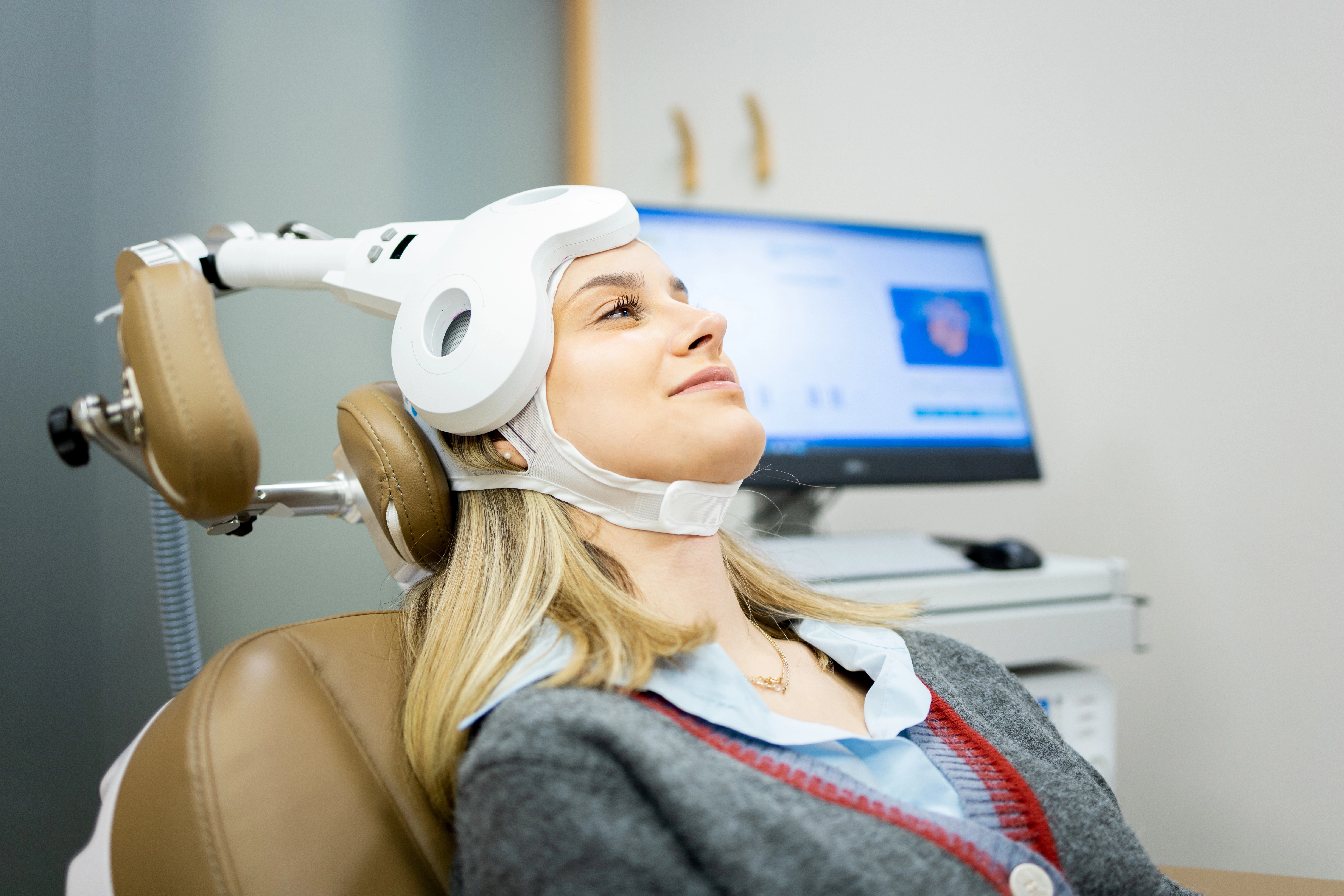
TMS does not require surgery, needles, or sedation. Patients stay awake and alert the entire time. Many read, listen to music, or talk with the technician during a session. There is no recovery period, so patients can drive, work, and go about their day right afterward.
TMS also does not expose the body to medication. This matters for patients who have had trouble with antidepressant side effects such as weight gain, sexual side effects, fatigue, or stomach upset. Because the magnetic pulses act only on a small area of the head, TMS does not cause these body-wide effects.
At Contemporary Care, we use TMS mainly for treatment-resistant depression. That term generally describes depression that has not improved enough after trying antidepressant medications at adequate doses for an adequate length of time. TMS is one of several interventional options we provide alongside medication management, counseling, and Spravato.
There are different TMS approaches. Standard repetitive TMS delivers pulses in a set pattern over a session that commonly lasts around 20 to 40 minutes. Another approach, called theta burst stimulation, delivers pulses in rapid bursts and can shorten each session to a few minutes. Your provider decides which protocol fits your situation based on your history and goals.
Electroconvulsive therapy is a medical treatment in which a brief, controlled electrical current is passed through the brain while the patient is under general anesthesia. This current triggers a short seizure, usually lasting less than a minute or two. The patient also receives a muscle relaxant, so the body stays mostly still during the seizure. The patient is asleep and does not feel the treatment.
ECT has been used for decades. It carries an outdated reputation from older movies and early practices, when treatments were given without anesthesia or muscle relaxants. Modern ECT looks very different. It is performed by a medical team with anesthesia support and close monitoring of heart rate, oxygen levels, blood pressure, and brain activity.
Scientists still study exactly why ECT works. The leading view is that the controlled seizure causes widespread changes in brain chemistry and brain connections. These changes include shifts in neurotransmitters such as serotonin, dopamine, and norepinephrine. ECT may also encourage the growth of new connections between nerve cells in areas linked to mood and memory. The effect is broader than TMS, which focuses on one targeted region.
ECT is widely considered one of the most effective treatments for severe depression. It often works faster than medication. For this reason, it is often used when a person’s depression is life-threatening, when they cannot eat or drink, when they show symptoms of psychosis, or when other treatments have failed. It is also used for some cases of bipolar disorder and catatonia.
Because ECT involves general anesthesia, it is typically delivered in a hospital or another medical setting equipped for anesthesia care. Patients need someone to drive them home after each session, and many need to pause driving and some daily responsibilities during the full treatment course.
Both treatments aim to restore healthier activity in brain networks that are not working well during depression. The key difference lies in how they deliver energy to the brain and how much of the brain they affect. TMS uses magnetic fields to nudge activity in a focused area. ECT uses electricity to produce a brief, whole-brain event. These differences explain many of the contrasts in side effects, scheduling, and speed of results.
How TMS changes brain activity. A TMS coil contains tightly wound wire. When electricity flows through the coil in quick pulses, it produces a magnetic field. This field passes painlessly through the scalp and skull. When it reaches the brain, it creates a small electrical current in the nerve cells beneath the coil. That current makes the cells fire.
One pulse alone does not treat depression. The benefit comes from repeating pulses in a set rhythm across many sessions. Repeated stimulation strengthens the connections between nerve cells in the targeted area. Scientists call this process neuroplasticity, which means the brain’s ability to rewire itself over time. As the targeted area becomes more active, it begins to communicate better with deeper regions that regulate mood.
Many people with depression show an imbalance between brain networks. One network, often linked to self-focused thinking and rumination, may be overactive. Another, linked to focus, planning, and emotional control, may be underactive. TMS aimed at the left prefrontal cortex can help shift this balance. Patients sometimes describe the result as feeling less stuck in negative thought loops and more able to take action.
TMS stimulation stays below the level that would cause a seizure. The magnetic field weakens quickly with distance from the coil, so it mainly affects tissue close to the surface of the brain. Changes in deeper areas happen through the brain’s own connections.
How ECT changes brain activity. ECT works on a much larger scale. Electrodes are placed on the scalp, either on one side of the head or on both sides. A brief electrical pulse passes between them. This pulse is designed to be just strong enough to produce a seizure, and modern devices use short pulses to limit side effects.
The seizure itself appears to be the active ingredient. During and after the seizure, the brain releases a wave of chemical messengers. Over a series of treatments, these changes seem to reset brain circuits involved in mood, sleep, appetite, and thinking. Research also suggests ECT may increase the size and activity of the hippocampus, a region tied to memory and emotion that often shrinks during long-lasting depression.
Because ECT acts across the whole brain, its effects are stronger and broader than those of TMS. This broad action is part of why ECT can help with symptoms that TMS does not typically target, such as psychosis or catatonia. The same broad action also explains why ECT is more likely to affect memory and thinking in the short term.
Placement and dosing matter. With TMS, providers locate the treatment target and find the right strength for each patient. This step usually involves measuring the motor threshold, which is the lowest strength that causes a slight twitch in the hand. Treatment strength is then set relative to this number. With ECT, the medical team chooses electrode placement and electrical dose based on the patient’s age, seizure threshold, and how quickly symptoms need to improve. Placement on one side of the head often causes fewer memory effects than placement on both sides.
The day-to-day experience of each treatment is one of the biggest differences patients notice.
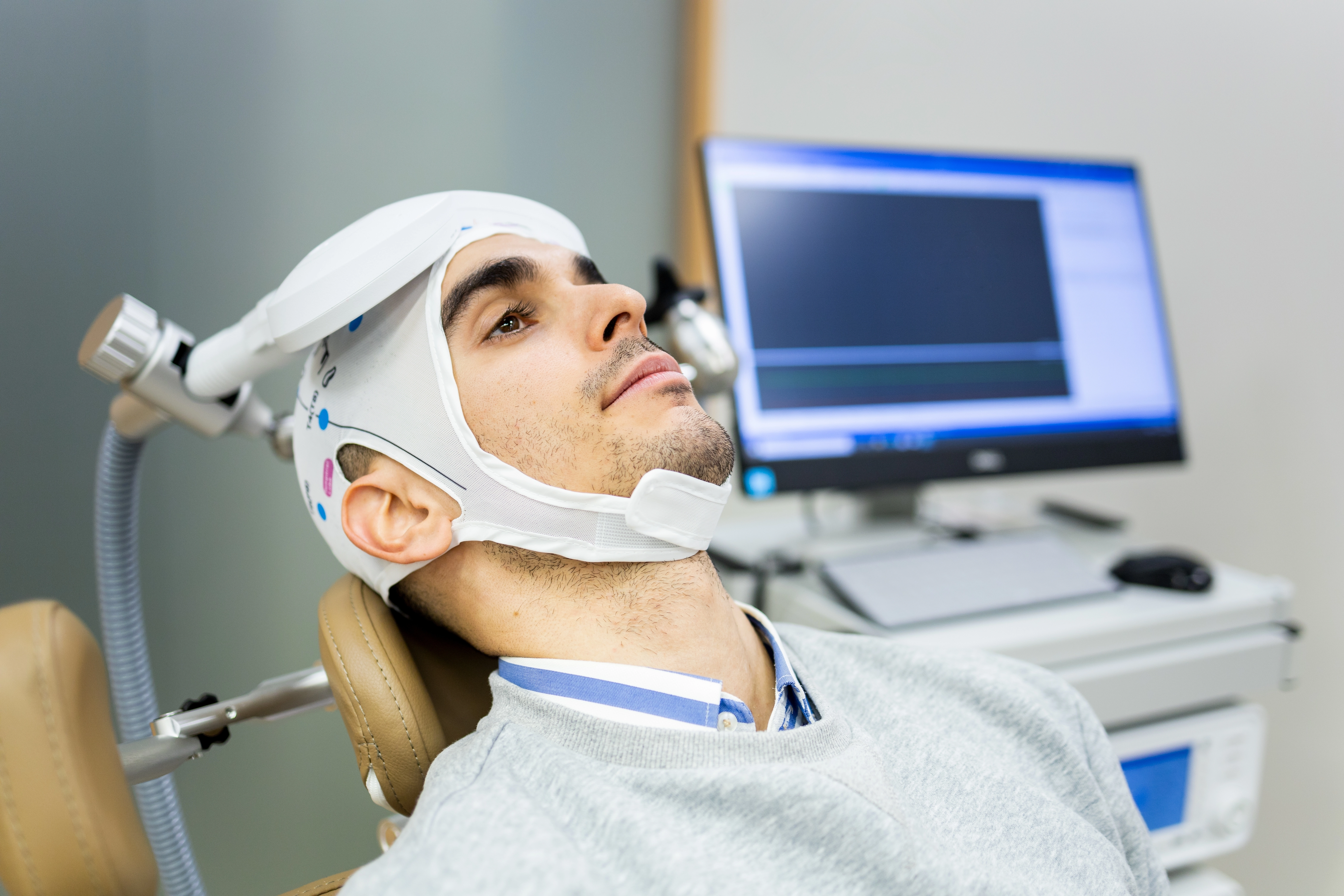
The TMS experience. Patients arrive, settle into a comfortable reclining chair, and stay fully dressed. Earplugs or headphones are provided because the device makes a clicking sound with each pulse. The coil is positioned against the head at the treatment target.
When pulses begin, most patients feel a tapping or knocking sensation on the scalp. Some describe it as a woodpecker tapping on the head. The muscles of the scalp, face, or jaw may twitch slightly. The first few sessions often feel the most noticeable. Most patients adapt quickly, and many find that the sensation fades into the background by the end of the first week.
During the session, patients stay awake. They can talk, listen to music, or simply rest. A trained technician stays nearby to monitor comfort and coil position. When the session ends, patients get up and leave. No one needs to drive them, and they can return to work, school, or home responsibilities right away.
Over the course of treatment, our team checks in regularly about mood, sleep, energy, and side effects. These check-ins help us track progress and adjust the plan if needed.
The ECT experience. ECT feels very different because the patient is asleep for the treatment itself. Patients are usually asked not to eat or drink for several hours beforehand because of the anesthesia. On treatment days, they arrive at a medical setting where an anesthesia team, a psychiatrist, and nursing staff work together.
Patients receive general anesthesia through an IV, along with a muscle relaxant. Once asleep, the treatment takes only a few minutes. Patients do not feel the electrical current or the seizure. They wake up in a recovery area, often within several minutes, and stay under observation until they are alert and stable.
Many patients feel groggy or confused when they first wake up. This feeling usually fades within an hour or so. Headache, jaw soreness, or muscle aches are common afterward. Because of the anesthesia, patients cannot drive the rest of that day and need someone to take them home. During the full course of ECT, many patients are advised not to drive at all and to avoid major decisions until the course is complete and their memory and thinking have settled.
What this means for daily life. TMS asks for time but very little disruption. A patient might come in before work, during a lunch break, or after school drop-off. ECT asks for fewer visits but more disruption per visit. It often requires help from family or friends, time away from work, and a pause in driving. For some patients, this disruption is a fair trade for faster relief from severe symptoms. For others, the ability to keep living a normal routine makes TMS the clear first choice.
Both TMS and ECT can produce meaningful relief for people whose depression has not improved with medication. They differ in how strong the effect tends to be, how quickly it appears, and which kinds of depression they suit.
Speed of response. ECT often works faster. Some patients notice improvement after the first few treatments, which may be within one to two weeks.
TMS usually works more gradually. Many patients start to notice changes after two to four weeks of daily sessions. Early signs are often subtle. Sleep may improve, energy may rise, or daily tasks may feel slightly easier before mood itself lifts. Family members sometimes notice changes before the patient does.
Strength of response. ECT is generally considered the most powerful acute treatment for severe depression. It tends to produce higher response and remission rates than TMS, particularly for depression with psychotic features or catatonia. TMS still helps a meaningful share of patients who have not responded to medication, and some patients reach full remission. TMS results also tend to be steadier for patients with moderate to severe depression who do not need emergency care.
Durability. Neither treatment cures depression permanently for everyone. After ECT, relapse is common without ongoing treatment, so most patients continue with medication, maintenance ECT, or both. After TMS, many patients stay well for months or longer, especially when they continue with medication and counseling. If symptoms return, patients can often complete another TMS course.
Side effects compared with benefit. Effectiveness always needs to be weighed against side effects and impact on daily life. A treatment that works slightly better on average may not be the right first choice if it requires anesthesia, affects memory, and disrupts work or family life. For many patients, TMS offers a strong balance of benefit and tolerability. ECT remains important for patients who need fast, powerful treatment and for those who have not responded to other options.
TMS is often a good fit for adults with major depressive disorder who have not improved enough with antidepressant medication. It may suit patients who:
Have tried one or more antidepressants without enough relief
Could not tolerate medication side effects such as weight gain, sexual problems, fatigue, or nausea
Want a treatment that does not add another medication
Need to keep working, studying, driving, or caring for family during treatment
Prefer to avoid anesthesia
Have moderate to severe depression but are not in immediate crisis
Responded to TMS in the past and are now having symptoms again
TMS also fits patients who are concerned about memory. Because TMS does not cause a seizure and does not require anesthesia, it does not carry the memory effects linked with ECT. Students, professionals, and older adults who rely on sharp thinking often value this difference.
Our team at Contemporary Care uses TMS primarily for depression. Patients with depression often have other conditions at the same time, such as anxiety symptoms, PTSD, or ADHD. We take these conditions into account when building a full care plan. TMS may be one part of that plan, alongside medication management and counseling for the other conditions.
Who may not be a good candidate for TMS. TMS is not right for everyone. Because it uses a strong magnetic field near the head, it is generally not used in patients with certain metal or electronic devices in or near the head. Examples include cochlear implants, deep brain stimulators, aneurysm clips, or metal fragments near the brain. Most dental fillings and braces are not a problem, but your provider reviews this carefully.
Patients with a history of seizures, epilepsy, or certain brain injuries need a careful review. In those situations, TMS may become part of the plan later, once the person is safe and stable.
ECT is typically considered for patients with the most severe or urgent forms of depression and certain other serious conditions. It may also be considered during pregnancy for severe illness, because it avoids certain medications. Each of these decisions involves a careful medical assessment.
Who may not be a good candidate for ECT. Because ECT involves general anesthesia and a brief seizure, it puts more strain on the body than TMS. Patients with certain heart conditions, a recent heart attack or stroke, or increased pressure inside the skull need careful evaluation. ECT may still be possible, but it requires extra planning and monitoring.
People who need to protect their short-term memory, such as students during exams or professionals in demanding roles, may find ECT difficult to fit into their lives. For patients with moderate depression who are not in crisis, the trade-offs of ECT are often harder to justify, and gentler options such as TMS or Spravato are typically tried first.
Where TMS and ECT overlap. There is a group of patients who could reasonably consider either treatment. These are usually adults with treatment-resistant depression who are not in immediate danger. For this group, many providers suggest trying TMS before ECT because it has fewer side effects and less disruption. If TMS does not provide enough relief, ECT remains available as a later step through a provider who offers it.
Both TMS and ECT are well studied, and both are considered safe when used in the right patients with proper screening. Their side effect profiles differ significantly. TMS side effects are usually mild, short-lived, and limited to the head and scalp. ECT side effects are more noticeable and include effects from both the anesthesia and the treatment itself.
Understanding what to expect helps patients prepare and reduces worry. It also helps patients recognize which effects are normal and which ones need attention.
Most TMS side effects are mild and tend to fade as treatment continues.
Scalp discomfort. The tapping sensation can cause mild pain or tenderness at the treatment site. This is most common in the first week. Providers can adjust coil position or strength slightly to improve comfort, then increase it gradually as the patient adapts.
Headache. Mild headaches are among the most common TMS side effects. They usually respond to over-the-counter pain relievers. Headaches tend to become less frequent after the first few sessions.
Facial twitching. Some patients notice twitching in the muscles of the face, eyelid, or jaw during pulses. This stops as soon as the pulses stop. It is not harmful.
Lightheadedness. A few patients feel slightly lightheaded or tired after a session. This usually passes quickly.
Hearing. The TMS device makes a loud clicking sound. Earplugs or other hearing protection are always used to prevent any effect on hearing.
Rare effects. The chance is very low when patients are properly screened and when treatment settings follow established guidelines. Our team watches for signs of this during treatment.
What TMS does not cause. TMS does not require anesthesia, so it carries no anesthesia-related effects. It does not cause the memory loss associated with ECT. Studies of thinking and memory during TMS generally show no decline, and some patients report clearer thinking as depression lifts. TMS does not cause weight gain, sexual side effects, or the body-wide effects that some antidepressants produce.
Tips for comfort during TMS.
Get a full night of sleep before sessions, since sleep loss can affect the brain’s sensitivity to stimulation.
Tell the technician right away if a sensation feels too strong. Small adjustments can make a big difference.
Keep a simple daily log of mood, sleep, and energy. This helps you and your provider spot early changes.
Let your provider know about any new medications, supplements, or changes in alcohol use during treatment.
Stay consistent. Missing sessions can slow progress.
ECT side effects come from two sources: the general anesthesia and the treatment itself.
Confusion after treatment. Many patients feel confused or disoriented when they wake up. They may not know where they are or why they are there for a short time. This usually clears within minutes to a few hours. Older adults may experience longer periods of confusion.
Memory effects. Memory problems are the most discussed side effect of ECT. They usually take two forms. First, patients may have trouble forming new memories during the treatment course. They may forget conversations or events that happened during those weeks. This effect usually improves over the weeks after treatment ends. Second, some patients lose memories from before treatment, particularly from the weeks or months leading up to ECT. Most of these memories return over time, but some patients report lasting gaps.
Headache. Headaches are common on treatment days. They usually respond to standard pain relievers.
Muscle aches and jaw pain. The muscle relaxant and the brief seizure can leave muscles sore. Jaw soreness is also common.
Nausea. Some patients feel nauseated after waking from anesthesia. Medication can help.
Anesthesia-related effects. General anesthesia carries its own effects, such as grogginess, sore throat, and changes in heart rate or blood pressure during treatment. The anesthesia team monitors patients closely throughout.
Effects on daily life. Because of memory and thinking effects, patients receiving ECT are usually advised to avoid driving, signing legal documents, or making major financial or life decisions during the course and for a short period afterward. Many take time away from work or school.
Comparing the side effect profiles. The difference is significant. TMS side effects tend to stay local to the scalp and head and fade within the first weeks. ECT side effects affect thinking and memory and require planning around daily responsibilities. For patients with severe, dangerous depression, these effects may be an acceptable price for fast, powerful relief. For patients whose depression is serious but not an emergency, TMS often provides a gentler path that protects memory and daily function.
Beyond effectiveness and side effects, practical factors play a large role in choosing between TMS and ECT. Scheduling, transportation, time away from work, and the setting where treatment happens all affect whether a patient can complete a full course.
TMS schedule. A standard course of TMS involves sessions five days a week for about four to six weeks. This often adds up to around 30 to 36 sessions. Some courses include a taper period at the end, with sessions spaced further apart over several weeks.
Each session with a standard protocol often lasts about 20 to 40 minutes. With theta burst protocols, the active treatment can take only a few minutes. Including arrival and setup, many patients spend under an hour at each visit.
Daily sessions can sound like a large commitment. Many patients find that the routine becomes manageable because each visit is short and requires no recovery time. Visits can often fit around work or family schedules.
Consistency matters with TMS. The benefit builds over time, so completing the full course gives the treatment the chance to work. Missing occasional sessions is usually manageable, but frequent gaps can slow progress.
ECT schedule. ECT is typically given two or three times a week. A course commonly involves 6 to 12 treatments, though some patients need more or fewer depending on how they respond. A full course often spans three to six weeks.
Each ECT treatment takes only a few minutes, but the full visit is much longer. Patients need time for pre-treatment checks, anesthesia, the treatment itself, and recovery monitoring. A single ECT visit can take several hours from arrival to discharge.
After the initial course. Both treatments may involve follow-up care. After ECT, many patients continue with maintenance ECT sessions, spaced out over weeks or months, to help prevent relapse. Most also continue medication. After TMS, many patients continue medication and counseling. If depression returns, a repeat TMS course or a shorter set of booster sessions may help.
Anesthesia is one of the clearest dividing lines between the two treatments.
TMS requires no anesthesia. Patients stay fully awake. There is no IV, no fasting, and no sedation. Because of this, there is no recovery period. Patients can leave right after each session and drive themselves home or to work. They can return to their normal activities immediately.
This absence of anesthesia also means TMS can be a reasonable option for patients who have concerns about general anesthesia because of age, health conditions, or past experiences.
ECT requires general anesthesia every session. Each treatment involves fasting beforehand, an IV, anesthesia medication, and a muscle relaxant. The anesthesia team monitors breathing, oxygen, heart rhythm, and blood pressure throughout.
After treatment, patients spend time in a recovery area until they are awake and stable. Most feel groggy and may be confused for a while. They cannot drive for the rest of the day and need a responsible adult to take them home. Many patients rest for the remainder of the treatment day.
During the full course of ECT, patients are often advised not to drive at all. This means they may need rides two or three times a week for several weeks, which can place real demands on family and friends.
Repeated anesthesia. Because a course of ECT involves many treatments, patients receive general anesthesia many times within a few weeks. The medical team assesses whether a patient’s heart, lungs, and overall health can safely handle this. Patients with complex medical histories may need extra testing before starting.
Recovery between sessions. With TMS, there is essentially no recovery between sessions. With ECT, patients often feel tired or foggy on treatment days and may need the following day to feel more like themselves. Memory and thinking effects can build up over the course and then improve over the weeks after treatment ends.
For many patients, the question of anesthesia and recovery shapes the decision more than any other factor. A treatment that lets someone keep their job, drive their children to school, and maintain their routine can make a meaningful difference in whether the full course is completed.
Where a treatment is offered affects how easy it is to start and finish.
TMS is offered in outpatient offices. Because TMS needs no anesthesia, it can be provided in an outpatient psychiatric office rather than a hospital. At Contemporary Care, we provide TMS through our offices in Danbury, Greenwich, Naples, and Springfield. Patients do not need a hospital stay or a referral to begin the evaluation process with us.
Receiving TMS in an outpatient psychiatric setting means the same team that manages your medication and counseling can coordinate your TMS care. Changes in mood, sleep, or side effects can be addressed within one care plan rather than across separate facilities.
ECT is usually offered in hospital settings. Because ECT requires general anesthesia and close medical monitoring, it is generally provided in hospitals or medical facilities with anesthesia teams. Some patients receive ECT while staying in the hospital, especially if they are in crisis. Others receive it as outpatients, returning for each session. In either case, the setting is more medical and the visits take longer.
Coordinating care. Patients considering ECT typically work with a psychiatrist who provides it and an anesthesia team. Patients who already see an outpatient psychiatric provider may continue that relationship for medication and therapy while receiving ECT elsewhere.
Insurance plans often have specific requirements for both TMS and ECT, such as documentation of past medication trials. Our team can explain how this works for TMS during your evaluation. You can find general information on our Insurance.
There is no single correct answer to the question of TMS or ECT. The right choice depends on how severe your symptoms are, how quickly you need relief, your medical history, your past treatment experience, and how each option would fit into your life. The decision is made together with a psychiatric provider who knows your history and can explain the trade-offs honestly.
Many patients find it helpful to think of treatment options as steps. Medication and counseling usually come first. When those do not provide enough relief, interventional options such as TMS and Spravato are often the next step. ECT is generally reserved for severe, urgent, or highly resistant cases, though it can be the first choice in an emergency.
Clear questions to your appointment help you get the most out of the conversation. The following factors often shape the decision.
Severity and urgency of symptoms. Is your depression interfering with your ability to eat, sleep, work, or care for yourself? Are you having thoughts of suicide? If symptoms are severe and dangerous, a faster and more intensive treatment such as ECT, or a higher level of care, may be needed right away. If symptoms are serious but you are safe, TMS or other outpatient options may be appropriate. If you are in immediate danger, call 911 or go to the nearest emergency room.
Your treatment history. Your provider will want to know which medications you have tried, at what doses, for how long, and what happened. Note which ones helped partly, which ones did not help, and which ones caused side effects you could not tolerate. Past experience with therapy, Spravato, TMS, or ECT also matters. A good past response to a treatment often predicts a good future response.
Presence of psychosis or catatonia. If you have experienced hallucinations, delusions, or periods where you stopped moving or speaking, share this with your provider. These symptoms often point toward ECT or other intensive care rather than TMS as the first step.
Medical conditions. Tell your provider about any history of seizures, head injury, stroke, heart disease, or other major medical conditions. Also share any metal or electronic implants in your body, especially in or near your head. These details affect safety for both TMS and ECT.
Current medications and substances. Some medications can affect seizure threshold or interact with anesthesia. Alcohol use, recreational drug use, and caffeine intake can also matter. Honest answers help your provider keep treatment safe.
Memory and thinking demands. Consider how much your daily life depends on short-term memory and focus. If you are in school, working in a demanding job, or caring for others, discuss how ECT’s memory effects might affect you. TMS generally does not affect memory.
Your daily schedule. Think about whether you can attend daily TMS sessions for several weeks or whether you can arrange rides and time off for ECT several times a week. Both commitments are real. One may fit your life better than the other.
Your support system. ECT typically requires someone to drive you after each treatment and to help during the course. TMS can usually be done on your own. Consider who can support you and how much help you can realistically count on.
Your preferences and concerns. Your feelings about anesthesia, seizures, memory, or magnetic stimulation are valid parts of the decision. Share your worries openly. A good provider will explain what is known, address misconceptions, and respect your choices.
Questions you may want to ask.
Based on my history, which treatment do you think fits me better, and why?
How soon might I notice improvement with each option?
What side effects are most likely for me specifically?
Can I keep taking my current medications during treatment?
What happens if the first treatment does not work?
How will we track my progress?
TMS vs. ECT: How the Treatments Compare is a question many patients face when depression does not improve with medication. TMS offers a non-invasive, routine-friendly option with fewer side effects, while ECT provides a faster, more intensive approach for severe or urgent cases. Understanding the differences helps you and your provider choose the treatment that fits your needs and goals.