
Call us
Danbury, CT
Greenwich, CT
Naples, FL
Springfield, NJ
Call us
Danbury, CT
Greenwich, CT
Naples, FL
Springfield, NJ
A good candidate for Spravato is an adult with major depressive disorder who has not found enough relief from oral antidepressants, or an adult whose depression includes suicidal thoughts or behaviors. Candidates also need to be medically stable enough for in-office treatment and monitoring. At Contemporary Care, our team reviews each patient’s health history, past treatments, and current symptoms to decide whether Spravato is a safe and appropriate next step.
This article explains who qualifies, who may not, and what treatment involves for those who are a fit.
Spravato is a prescription nasal spray that contains esketamine. It is designed for adults living with depression that has not improved enough with standard care. It is the only esketamine treatment we offer.
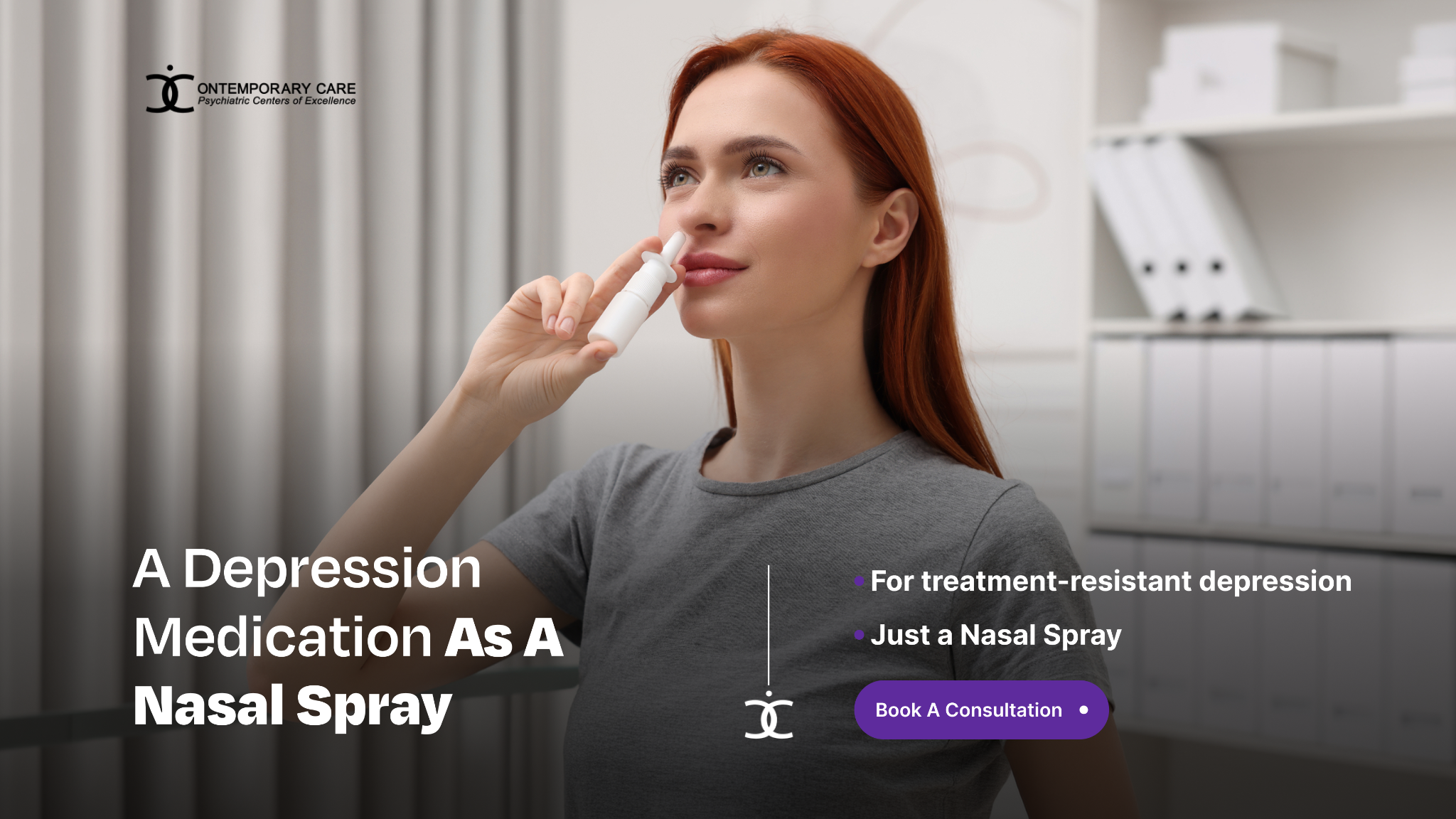
Spravato is different from the daily pills most patients have already tried. Patients use it during scheduled visits at our office, under the direct watch of our clinical staff. They do not take it home. This supervised setting is a core part of how the treatment works and how we keep patients safe.
Spravato is one of several Treatments we provide, alongside medication management, counseling, and TMS therapy.
Most traditional antidepressants act on serotonin, norepinephrine, or dopamine. These medications can take several weeks to show an effect. For some patients, they never bring enough relief.
Spravato works through a different pathway. It acts on glutamate, the most common chemical messenger in the brain. Glutamate plays a role in how brain cells form and strengthen connections. Researchers believe that supporting these connections may help the brain recover from the effects of long-term depression.
Because Spravato uses a different mechanism, it can help patients whose depression did not respond to medications that target serotonin or similar chemicals. Many patients notice changes sooner than they did with oral antidepressants. Results vary from person to person.
Eligibility comes down to three questions. Does the patient have a diagnosis Spravato is meant to treat? Have other treatments fallen short? Is the patient healthy enough to receive it safely? Our providers look at all three before recommending treatment.

Spravato is approved for two main groups of adults. Each group has its own clinical picture.
This usually means a patient has tried at least two different antidepressants during the current depressive episode without enough improvement. Each medication should have been taken at a proper dose and for a long enough period to judge whether it worked.
Patients in this group often describe a familiar pattern. A medication helps a little, then stops helping. Side effects lead them to quit. Or nothing changes at all despite months of effort. These patients are often good candidates for Spravato. It may be used along with an oral antidepressant or, for some patients, on its own, depending on their treatment plan.
Spravato is also used for adults with major depressive disorder who have active suicidal thoughts or behaviors. In this group, it is given together with an oral antidepressant as part of a broader plan.
Spravato does not replace emergency care or hospitalization when a patient needs it. Anyone in immediate danger should call 911. For patients who are safe to treat in an outpatient setting, Spravato can be one part of a plan that also includes close follow-up and ongoing psychiatric support.
Who Is a Good Candidate for Spravato Treatment? The answer depends on a careful evaluation. Our team uses a dedicated Spravato evaluation to review each patient’s history before treatment begins.
The evaluation starts with a full look at the patient’s mental health. Our providers confirm the diagnosis and ask about the length and severity of the current episode. They also screen for other conditions, such as anxiety, PTSD, bipolar disorder, and any history of psychosis.
The medical side of the assessment matters just as much. Spravato can raise blood pressure for a short time after each dose. Our team reviews heart health, blood pressure history, and other conditions that may affect safety.
A detailed treatment history helps our providers decide whether a patient’s depression is truly treatment resistant. They will ask which antidepressants the patient has taken, the doses used, and how long each was tried. They will also ask why each medication was stopped.
Patients should be ready to discuss past therapy, hospital stays, and any other interventions. This history shows what has already been tried. It also helps our team decide whether Spravato, TMS, a medication change, or a combination makes the most sense.
Some health conditions make Spravato unsafe. Others call for extra caution or closer monitoring. During the evaluation, our team reviews blood pressure, blood vessel health, substance use history, pregnancy status, and current medications. These factors are covered in more detail below.
Patients should share their full health picture. Complete information helps our providers make a safe recommendation.
Spravato is not right for everyone. Knowing the reasons a patient may not qualify helps set clear expectations before the first visit.

Certain conditions rule out Spravato entirely. These include:
Aneurysmal vascular disease. This includes aneurysms in the chest, abdomen, brain, or limbs.
Arteriovenous malformation. This is an abnormal tangle of blood vessels.
A history of bleeding in the brain.
Other conditions do not always rule out treatment but call for careful review. These include:
High blood pressure that is not well controlled. Patients may need to bring their blood pressure under control before starting.
Heart disease or a recent stroke.
A history of psychosis. Spravato can cause temporary changes in perception, which may not be suitable for some patients.
A history of substance misuse. Esketamine has the potential for misuse, so our providers review this history closely.
Pregnancy or plans to become pregnant. Spravato is not recommended during pregnancy, and patients who could become pregnant should discuss this with their provider.
Liver problems. Severe liver disease may affect how the body processes the medication.
Spravato is approved for adults. It is not used to treat children or teens.
Patients who have had an allergic reaction to esketamine or ketamine should not use Spravato.
Several types of medications can interact with Spravato:
Central nervous system depressants. These include benzodiazepines, opioids, and alcohol. Combining them with Spravato can increase sedation.
Stimulants. Medications often prescribed for ADHD can raise blood pressure further when used with Spravato.
MAO inhibitors. These antidepressants can also increase blood pressure when combined with Spravato.
Taking one of these medications does not always rule a patient out. Our providers may adjust timing, doses, or monitoring. Patients should bring a complete list of their prescriptions, over-the-counter medications, and supplements to their evaluation.
Patients who qualify often want to know how treatment fits into daily life. Understanding the time commitment and the support involved helps them prepare.
Spravato is given in phases. During the first phase, patients usually come in twice a week for about four weeks. Visits then drop to once a week for the next several weeks. After that, many patients continue with weekly or every-other-week visits based on their response.
Each session takes place at our office. The patient uses the nasal spray under staff supervision, then stays for at least two hours so our team can monitor them. During this time, patients may feel drowsy, dizzy, or a bit disconnected from their surroundings. These effects are usually short lived and fade before the patient leaves.
Patients cannot drive or operate machinery for the rest of the day after a session. They should plan for a ride home from each visit. Most patients resume normal activities the next day after a full night’s sleep.
Our team checks blood pressure before and after each dose. We also watch for sedation and other short-term effects throughout the observation period.
Beyond each session, our providers track how mood and symptoms change over time. These check-ins help decide whether to continue, adjust, or change course. Many patients receive medication management or counseling alongside Spravato. Spravato works as part of a complete treatment plan rather than as a stand-alone fix.
Because we offer TMS therapy, medication management, and counseling in addition to Spravato, patients can shift between options or combine them as their needs change.
The only way to confirm candidacy is a personal evaluation. Online information can help a patient prepare. It cannot replace a provider’s review of their specific health history.
Our team provides Spravato treatment at our offices in Danbury, Greenwich, Naples, and Springfield. A referral is not required.
During the consultation, a provider reviews the patient’s diagnosis, past treatments, medical history, and current medications. The patient and provider discuss whether Spravato fits their goals. They also talk about what treatment would involve week to week and whether another option, such as TMS therapy, may be a better match.
Patients leave with a clear answer about whether they qualify. If Spravato is not the right fit, they also leave with a plan for other paths forward. Our psychiatric team, led by Dr. Tarique Perera, works across our locations to support patients through each stage of care.
Before the evaluation, it helps to think through a few key points to raise with the provider:
Your medication history. List each antidepressant you have tried, how long you took it, and why you stopped.
Your blood pressure and heart health. Share any diagnoses, readings, or medications for these conditions.
Your current medications. Include stimulants, sleep aids, anxiety medications, and pain medications.
Your substance use history. Honest answers help our team make a safe recommendation.
Your schedule and transportation. The early phase of treatment requires frequent visits and a ride home after each one.
Your treatment goals. Describe what relief would look like in your daily life.
Bringing these details to the visit helps our providers answer the question of who is a good candidate for Spravato treatment with confidence in your specific case.
Who Is a Good Candidate for Spravato Treatment? In most cases, it is an adult with major depressive disorder who has not improved enough with at least two antidepressants, or an adult whose depression includes suicidal thoughts. Candidates must also be medically stable, without conditions such as aneurysms or a history of brain bleeding. At Contemporary Care, each patient receives a full evaluation and supervised in-office treatment, with TMS therapy, medication management, and counseling available if a different approach fits better.