
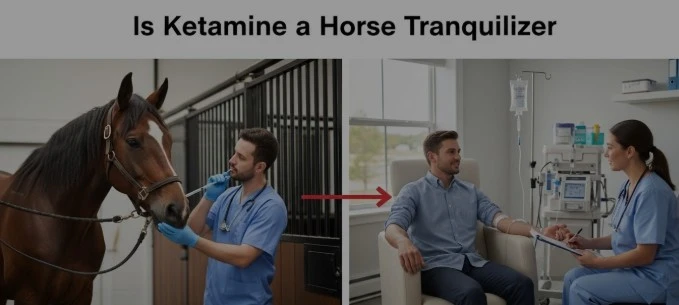
Is Ketamine a Horse Tranquilizer
Ketamine is a substance that often generates confusion and sensational headlines. Frequently labeled in the media as a “horse tranquilizer,” many people wonder whether its primary purpose is veterinary or human medical use. In reality, ketamine serves multiple purposes across both fields, ranging from anesthesia and depression treatment in humans to sedation and anesthesia in horses. This guide provides a comprehensive look at ketamine, its uses, mechanisms, safety, and the truth behind the “horse tranquilizer” label.
Short Answer: Is Ketamine a Horse Tranquilizer?
Yes, ketamine can be used as a horse tranquilizer, primarily for sedation and anesthesia during veterinary procedures. However, in humans, ketamine has medical and therapeutic applications, including anesthesia, pain management, and treatment-resistant depression.
It is important to note that the dosage and administration differ significantly between humans and horses, and the media often exaggerates the “horse tranquilizer” narrative, creating misconceptions about its effects on humans.
Understanding Ketamine: Uses and History
What is Ketamine?
Ketamine is a dissociative anesthetic first developed in the 1960s. Its main uses include:
Medical (humans): Surgery anesthesia, pain management, treatment-resistant depression (esketamine nasal spray).
Recreational: Club drug known for dissociative and hallucinogenic effects.
Veterinary: Sedation and anesthesia in animals, especially large animals like horses.
| Form | Human Use | Veterinary Use |
|---|---|---|
| Injectable | Surgery, anesthesia, depression therapy | Large animal sedation |
| Nasal Spray | Depression treatment | Rare, not standard |
| Oral/Sublingual | Off-label pain/depression | Not typically used |
History of Ketamine as a Horse Tranquilizer
Developed in the 1960s as a dissociative anesthetic.
Early adoption in veterinary medicine for equine anesthesia due to its rapid onset and relative safety.
Media references and pop culture contributed to the “horse tranquilizer” nickname, often overshadowing its legitimate medical use in humans.
How Ketamine Works in Humans vs Horses
Mechanism of Action
Ketamine works primarily by blocking NMDA receptors in the brain, resulting in:
Dissociation (sense of detachment from environment or self)
Anesthesia (loss of sensation)
Analgesia (pain relief)
| Species | Typical Dosage | Purpose | Duration |
|---|---|---|---|
| Humans | 0.5–2 mg/kg IV for anesthesia | Surgery, depression therapy | 30–60 min |
| Horses | 2–5 mg/kg IV | Sedation, anesthesia | 30–90 min |
| Cats/Dogs | 5–10 mg/kg IV | Sedation/anesthesia | 20–60 min |
Differences Between Veterinary and Human Use
Ketamine use varies between species in several key ways:
Dosage: Horses require higher doses per body weight due to size and metabolic differences.
Administration: Humans may receive IV, IM, nasal spray, or oral; horses typically receive IV or IM.
Monitoring: Human administration occurs in medical settings with controlled monitoring; horses require veterinary supervision and careful monitoring of vital signs.
Step-by-Step Guide: Safe Use of Ketamine
Administering ketamine safely requires careful planning, whether for human therapy or veterinary procedures.
| Step | Action | Notes |
|---|---|---|
| 1 | Identify purpose | Human therapy vs veterinary sedation |
| 2 | Dose calculation | Based on weight and species |
| 3 | Administration | IV preferred; IM for large animals |
| 4 | Monitor | Heart rate, respiration, consciousness |
| 5 | Recovery | Ensure full consciousness and safety |
Step 1: Determine the intended purpose (medical, veterinary, research).
Step 2: Select the appropriate dosage based on species and weight.
Step 3: Choose the correct administration method (IV, IM, nasal).
Step 4: Monitor vital signs and ensure safety throughout administration.
Step 5: Provide post-administration care and recovery monitoring to ensure full consciousness and prevent complications.
Comparison: Ketamine Use in Humans vs Horses
| Feature | Human Use | Horse Use |
|---|---|---|
| Purpose | Anesthesia, pain, depression | Sedation, anesthesia |
| Dosage | 0.5–2 mg/kg IV | 2–5 mg/kg IV |
| Administration | IV, IM, nasal | IV, IM |
| Monitoring | Medical supervision | Veterinary supervision |
| Duration | 30–60 min | 30–90 min |
| Safety | Prescription-controlled | Veterinary protocol |
Common Sub-Questions People Also Ask
Is ketamine really a horse tranquilizer?
Can humans safely use veterinary ketamine?
Why is ketamine called a horse tranquilizer in the media?
Are there differences in effects between humans and horses?
Can recreational use of ketamine be dangerous?
FAQs About Ketamine and Its Veterinary Use
Is ketamine a horse tranquilizer in humans?
No, while it is used in horses, human doses and purposes are medically controlled.Can ketamine used in animals be safely used in humans?
Veterinary ketamine is formulated differently; human use should always follow prescription guidance.Why is ketamine called a horse tranquilizer?
Media highlights its veterinary origins and large-animal use, creating a misleading reputation.What are the risks of ketamine misuse?
Addiction, dissociation, and overdose are significant risks with recreational use.How is ketamine administered in horses vs humans?
Horses: IV or IM. Humans: IV, IM, nasal, or oral.What safety measures exist for ketamine use?
Monitoring vital signs, proper dosing, and post-administration recovery.Does ketamine affect different species differently?
Yes, metabolic rates, receptor sensitivity, and dosage vary by species.Is ketamine legal for recreational use?
It is controlled in most countries; medical use requires a prescription.
Safety and Legal Considerations
Human Use: Prescription-only, closely monitored by medical professionals.
Veterinary Use: Legal under veterinary supervision; strict protocols ensure animal safety.
Recreational Use: Highly risky and illegal in most countries.
Best Practices: Correct dosing, monitoring, and legal compliance are critical in all scenarios.
Additional Informational Tables
Table 1: Ketamine Forms and Uses
| Form | Human Use | Horse Use | Notes |
|---|---|---|---|
| Injectable | Anesthesia, depression | Sedation | Most common for both species |
| Nasal Spray | Depression | Rare | Esketamine in humans only |
| Oral | Off-label pain therapy | Rare | Not standard in horses |
Table 2: Detection and Duration of Effects
| Species | Onset | Duration | Recovery Time |
|---|---|---|---|
| Humans | 1–5 min IV | 30–60 min | 1–2 hours |
| Horses | 2–10 min IV | 30–90 min | 1–3 hours |
| Cats/Dogs | 2–5 min IV | 20–60 min | 30–90 min |
Table 3: Misconceptions vs Facts
| Misconception | Fact |
|---|---|
| Ketamine is only for horses | Used medically in humans for anesthesia and depression |
| Recreational ketamine is safe | Can cause serious health risks and addiction |
| All ketamine is the same | Formulation and dosing differ between humans and animals |
Table 4: Ketamine Regulatory Classification
| Country | Human Use | Veterinary Use | Recreational Status |
|---|---|---|---|
| USA | Schedule III | Prescription veterinary use | Illegal |
| UK | Class B | Prescription veterinary use | Illegal |
| Australia | Schedule 8 | Veterinary use allowed | Illegal |
Conclusion
Ketamine is used as a horse tranquilizer, but the label is often misleading when discussing human use. In humans, ketamine serves critical medical purposes, including anesthesia, pain management, and treatment-resistant depression. If you or someone you know is considering ketamine treatment, reach out to Contemporary Care.
Safe and effective use of ketamine whether for humans or animals requires proper administration, accurate dosing, monitoring, and adherence to legal and medical guidelines. Understanding the differences in species, dosage, and purpose helps dispel myths and highlights ketamine’s legitimate therapeutic roles.

About the Author
Dr. Tarique Perera
Take the First Step Toward Feeling Better
December 4, 2025