
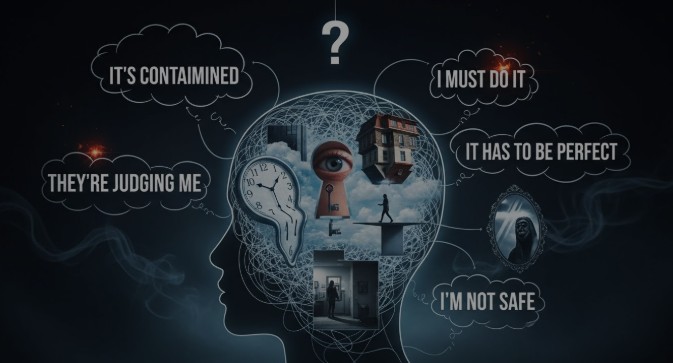
Can OCD Make You Believe Things That Aren’t True
Obsessive-Compulsive Disorder (OCD) is widely known for causing repetitive behaviors and intrusive thoughts. But many people wonder: can OCD make you believe things that aren’t true? The answer is yes OCD can distort perception and generate false beliefs, often referred to as “obsessional thoughts” or “intrusive doubts.” These beliefs are not delusions in the clinical sense but can feel profoundly real and distressing, affecting daily life, relationships, and self-confidence.
In this guide, we’ll explore why OCD leads to false beliefs, how to identify them, and practical strategies to manage them. We’ll also provide tables, step-by-step methods, and expert insights to help you navigate this complex condition.
Short Answer: Can OCD Make You Believe Things That Aren’t True?
Yes, OCD can make you believe things that aren’t true. Intrusive thoughts and obsessions often present scenarios that feel possible, triggering intense anxiety and doubt. While someone with OCD usually recognizes these thoughts as unlikely, the constant worry can blur the line between reality and obsession.
Key terms to understand: intrusive thoughts, obsessions, and OCD symptoms. Recognizing these patterns is the first step toward managing them.
Understanding OCD and False Beliefs
What is OCD?
Obsessive-Compulsive Disorder is a chronic mental health condition characterized by:
Obsessions: Recurrent, unwanted thoughts or images that cause distress.
Compulsions: Repetitive behaviors or mental rituals aimed at reducing anxiety caused by obsessions.
Example: Someone may repeatedly check the stove because they fear leaving it on, even though they know they turned it off.
Statistics:
Affects about 1–2% of the global population.
Can develop in childhood, adolescence, or early adulthood.
Symptoms vary in intensity and type, often waxing and waning over time.
How OCD Affects Thoughts
OCD can distort thinking, creating false beliefs that feel real. These include:
Intrusive thoughts vs. reality: Thoughts like “I might harm someone” can feel dangerous even though the person has no intention.
Cognitive distortions: Exaggerating risk, catastrophic thinking, or magical thinking.
Examples of OCD-related false beliefs:
I contaminated my hands; everyone I touch is at risk.
I might have cheated on my partner even though I haven’t.
I am responsible for bad things happening.
Can OCD Cause Delusional Thinking?
OCD is not the same as psychosis, but it can create mistaken beliefs without full delusion:
| Feature | OCD | Psychosis |
|---|---|---|
| Insight | Usually intact | Often impaired |
| Belief intensity | High distress, doubts | Fixed, unshakable belief |
| Behavior | Rituals to reduce anxiety | Acting on belief regardless of consequences |
| Reality testing | Recognizes irrationality eventually | Often fails to distinguish reality |
Types of False Beliefs in OCD
Common Examples of OCD-Induced False Beliefs
Fear of harming others: Imagining accidental harm and obsessing over it.
Contamination fears: Believing in extreme contamination despite evidence.
Relationship or moral doubt: Questioning fidelity or honesty without proof.
Comparison Table of OCD Beliefs vs. Reality vs. Psychosis
| OCD Belief | Reality Check | Psychosis Difference |
|---|---|---|
| “I might harm someone” | Highly unlikely | May act on belief without distress |
| “I’m contaminated” | Objective cleanliness | Distorted perception of germs |
| “I cheated or lied” | Memory intact | False memory formation common |
| “I forgot to lock the door” | Door was locked | Belief persists even if checked repeatedly |
Why OCD Makes You Believe Things That Aren’t True
Cognitive Distortions in OCD
Catastrophizing: Imagining the worst-case scenario.
Overestimation of threat: Inflating danger beyond reality.
Magical thinking: Believing thoughts alone can cause events.
Example: If I think about hurting someone, it might actually happen.
Brain Mechanisms Behind False Beliefs
OCD-related false beliefs are linked to specific brain circuits:
Cortico-striatal-thalamo-cortical (CSTC) loop: Overactivity causes repeated worry cycles.
Role of anxiety: Heightened anxiety amplifies intrusive thoughts, making them feel real.
Neurotransmitters: Imbalances in serotonin affect impulse control and thought regulation.
Psychological and Emotional Triggers
Stress and fatigue: Exhaustion worsens obsessive thinking.
Perfectionism and need for certainty: Heightens focus on minor errors or imagined harm.
Life transitions or trauma: Trigger new intrusive doubts or exacerbate existing beliefs.
Step-by-Step Guide: Managing False Beliefs Caused by OCD
Recognize intrusive thoughts and label them as OCD.
Challenge cognitive distortions using Cognitive Behavioral Therapy (CBT).
Exposure and Response Prevention (ERP): Gradually face fears without performing rituals.
Mindfulness and grounding exercises to stay anchored in reality.
Medication (SSRIs) under supervision to reduce obsession intensity.
Seek professional help if symptoms interfere with daily functioning.
Combining CBT with ERP is often the most effective approach for OCD-related false beliefs.
Additional Table: OCD Strategies vs. Effectiveness
| Strategy | Description | Effectiveness |
|---|---|---|
| CBT | Identifies and challenges cognitive distortions | High |
| ERP | Gradual exposure to fears | Very High |
| Mindfulness | Reduces anxiety and thought attachment | Moderate |
| Medication (SSRIs) | Alters serotonin balance | High when combined with therapy |
| Self-help apps | Guided exercises and tracking | Moderate, supportive |
FAQs About OCD and False Beliefs
Can OCD make you paranoid?
Yes, OCD can mimic paranoia, but insight is usually retained, differentiating it from psychotic disorders.Are intrusive thoughts the same as believing them?
No. Intrusive thoughts are unwanted; false beliefs involve stronger conviction and distress.Can OCD lead to delusions?
Rarely, but severe OCD with poor insight may resemble delusional thinking.How long do OCD false beliefs last?
Duration varies; treatment can significantly reduce persistence.Is medication necessary to fix OCD-related false beliefs?
Not always, but SSRIs combined with therapy are highly effective.Can children develop OCD-related false beliefs?
Yes, OCD often emerges in childhood or adolescence.How do I explain my OCD false beliefs to loved ones?
Share trusted resources, use clear examples, and emphasize that thoughts are not intentions.Are there online resources to help manage OCD false beliefs?
Yes, including NIMH, OCD-UK, and International OCD Foundation.
Conclusion
OCD can indeed make you believe things that aren’t true, but these false beliefs are treatable. Understanding the difference between intrusive thoughts, cognitive distortions, and actual delusions is crucial. Professional help, therapy, and sometimes medication provide effective ways to regain clarity and control.
Awareness and validation, both from yourself and others, are vital in breaking the cycle of obsessive false beliefs. By recognizing the patterns and implementing step-by-step strategies, it’s possible to live a life where thoughts don’t control reality.

About the Author
Dr. Tarique Perera
Take the First Step Toward Feeling Better
December 4, 2025