
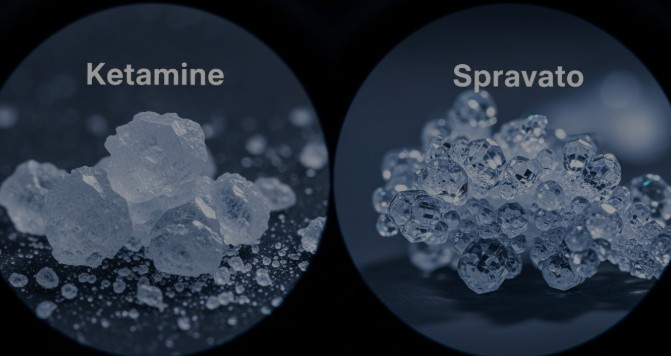
Understanding the difference between Spravato and ketamine is essential for anyone exploring modern treatments for depression. Although both medications come from the same family of drugs and impact similar pathways in the brain, they are not interchangeable, and each carries distinct advantages, limitations, and medical requirements.
Short Answer: Is Spravato the Same as Ketamine?
Quick Explanation
No, Spravato is not the same as ketamine. Spravato is a patented, FDA-approved nasal spray formulation of esketamine, while ketamine is an older, generic anesthetic used off-label for depression in infusion or injectable forms. They differ in formulation, approval status, administration method, monitoring rules, cost, and insurance coverage.
What Is Spravato? (EsKetamine)
How Spravato Works in the Brain
Spravato (esketamine) is a chemical subtype of ketamine known as the S-enantiomer, which binds more strongly to NMDA receptors. This interaction rapidly increases glutamate signaling, promoting synaptic growth and improving mood in ways traditional antidepressants cannot.
FDA Approval and Medical Indications
Spravato is one of the only fast-acting treatments approved specifically for depression. It is FDA-approved for:
-
Treatment-resistant depression (TRD)
-
Major depressive disorder with acute suicidal ideation or behavior
This makes it unique compared to regular ketamine, which is not FDA-approved for any psychiatric condition.
How It’s Administered (In-Clinic Protocols)
Spravato is self-administered via nasal spray inside a certified healthcare clinic, under direct supervision. Each session lasts about two hours, including:
-
Dosing
-
Vital monitoring
-
Observation for dissociation or blood-pressure changes
Patients must arrange a ride home, driving afterward is prohibited.
Safety Requirements & Monitoring Guidelines
Due to its FDA Risk Evaluation and Mitigation Strategy (REMS) program:
-
Spravato cannot be taken at home
-
Only registered healthcare facilities can administer it
-
Continuous monitoring is mandatory
These strict rules improve safety but increase cost and logistical complexity.
What Is Ketamine?
Types of Ketamine (Racemic Ketamine)
Traditional ketamine is racemic, meaning it contains both S-ketamine and R-ketamine. This broader mix may create different therapeutic effects than esketamine alone.
Medical Uses
Ketamine has been used for decades in:
-
Anesthesia
-
Pain management
-
Emergency medicine
-
Off-label depression treatment (most common via IV infusion)
Administration Methods
Clinics use several delivery formats:
-
IV infusions (most researched for depression)
-
IM injections
-
Oral lozenges (usually part of at-home treatment plans)
Because ketamine is generic, it’s flexible and widely available.
Safety Considerations & Risks
Ketamine is generally safe under medical care but may cause:
-
Dissociation
-
Dizziness
-
Nausea
-
Blood-pressure elevation
-
Short-term cognitive changes
Off-label clinics vary in quality, so choosing a reputable provider is essential.
Is Spravato the Same as Ketamine? (Core Explanation)
Key Differences: Is Spravato the Same as Ketamine?
While related, Spravato is chemically distinct, legally different, administered differently, regulated differently, and priced differently than ketamine.
Chemical Difference — EsKetamine vs Racemic Ketamine
-
Spravato = esketamine only (S-enantiomer)
-
Ketamine = both R- and S-enantiomers
The R-portion may play a unique antidepressant role, which Spravato does not include.
Legal & Regulatory Difference
-
Spravato is FDA-approved for depression.
-
Ketamine is only FDA-approved as an anesthetic; psychiatric use is off-label.
Potency and Pharmacology
Esketamine is roughly 2–4x more potent at NMDA receptor binding, but that doesn’t necessarily mean more effective — just differently active.
Differences in Research Evidence for Depression
Spravato’s approval is based on multiple controlled trials.
Ketamine’s depression research is broader, older, and includes thousands of patients but remains officially off-label.
Cost Differences
-
Spravato: $4,000–$7,000 per month (before insurance)
-
Ketamine: $300–$800 per infusion on average
Insurance Coverage Differences
-
Spravato: Commonly covered when criteria are met
-
Ketamine: Rarely covered for psychiatric use
Spravato vs Ketamine: Side Effects, Benefits, and Risks
Clinical Benefits Comparison
Both treatments rapidly improve depressive symptoms, often within hours. Spravato may offer more structured safety, while ketamine offers broader flexibility and potentially stronger and longer-lasting effects for some individuals.
Side Effects Comparison
Most common side effects include:
-
Dissociation
-
Dizziness
-
Nausea
-
Temporary blood pressure increases
Ketamine infusions may have slightly stronger dissociative effects due to higher absorbed doses.
Safety Protocols Comparison
-
Spravato: Mandatory supervision, standardized safety
-
Ketamine: Protocols vary by clinic
Who Each Option Is Best For
-
Choose Spravato if you need insurance coverage or prefer FDA-approved treatments.
-
Choose ketamine if you want IV infusion flexibility or access to R-ketamine’s potential benefits.
Step-by-Step Guide: How to Choose Between Spravato and Ketamine
Step 1 — Assess Your Diagnosis
Confirm whether you meet the criteria for TRD or MDD with suicidal ideation.
Step 2 — Evaluate Insurance Coverage
Spravato is widely covered; ketamine usually isn’t.
Step 3 — Consider Your Medical History
Your doctor will evaluate cardiovascular health, medications, and prior treatment failures.
Step 4 — Review Treatment Settings (Clinic vs. Infusion Center)
Spravato requires a REMS-certified clinic.
Ketamine can be administered in various clinic types.
Step 5 — Compare Expected Outcomes
Discuss onset speed, remission rates, and maintenance plans.
Step 6 — Discuss With a Certified Provider
Always consult a trained psychiatrist or ketamine specialist.
Step 7 — Plan for Monitoring & Follow-Up
Determine how often you’ll need sessions and long-term treatment planning.
Comparison Table: Spravato vs Ketamine
| Feature | Spravato (Esketamine) | Ketamine (Racemic) |
|---|---|---|
| FDA Status | Approved for TRD & MDD w/ SI | Not approved for depression |
| Administration | Nasal spray | IV, IM, oral |
| Monitoring | Mandatory 2-hour observation | Varies by clinic |
| Mechanism | S-ketamine only | R- and S-ketamine |
| Cost | High, often covered | Lower, rarely covered |
| Duration of Effects | 1–2 weeks | Days to weeks per infusion |
| Best For | Insurance-backed treatment | Flexible & lower-cost options |
People Also Ask
Does Spravato work faster than ketamine?
Both can work within hours, though IV ketamine typically acts fastest.
Is Spravato safer than ketamine infusions?
Spravato has stricter oversight, but both are safe when administered by trained professionals.
Can you switch from ketamine therapy to Spravato?
Yes — many patients transition based on cost, access, or clinical need.
Is Spravato better for treatment-resistant depression?
Spravato is FDA-approved for TRD, but ketamine may outperform it for some individuals.
Why is Spravato covered by insurance but ketamine is not?
Insurance covers FDA-approved uses only.
Which lasts longer: Spravato or ketamine infusions?
Evidence suggests IV ketamine may provide longer symptom relief for some patients.
Medical Safety Guidelines to Know Before Starting Either Treatment
Screening Requirements
Expect a review of:
-
Blood pressure
-
Heart conditions
-
Substance use history
-
Medication interactions
Contraindications
Avoid or use caution if you have:
-
Cardiovascular disease
-
Pregnancy or breastfeeding
-
Unmanaged substance misuse
What to Expect During Monitoring
Vitals are checked before, during, and after treatment. Dissociation typically peaks within 40 minutes and fades within 1–2 hours.
Potential Drug Interactions
Discuss benzodiazepines, stimulants, opioids, or alcohol with your doctor; these may blunt ketamine’s antidepressant effect or raise risks.
FAQs About Spravato and Ketamine
Is Spravato more effective than ketamine for depression?
Results vary. Some patients respond better to IV ketamine, others to Spravato’s structured protocol.
Why is Spravato so expensive?
It is a patented drug requiring in-clinic monitoring and carries high manufacturing and regulatory costs.
How long does Spravato stay in your system?
Typically 24–72 hours, though clinical effects last longer.
Can you use ketamine at home but not Spravato?
Yes — ketamine lozenges may be prescribed for home use, but Spravato must be taken in a REMS-certified clinic.
Does Spravato have fewer side effects than ketamine?
Side effects are similar, but dosing differences may make Spravato slightly gentler for some.
Is ketamine still used medically aside from depression?
Yes — it remains a widely used anesthetic and pain-management medication.
Do both Spravato and ketamine cause dissociation?
Yes, though intensity varies by dose and format.
Which treatment lasts longer?
Many patients report longer-lasting relief from IV ketamine.
Conclusion
Spravato and ketamine share biological roots, but they are not the same medication. Spravato is a regulated, FDA-approved esketamine nasal spray with strong insurance support and strict safety requirements. Ketamine, meanwhile, offers greater flexibility, lower cost, and strong research support through IV infusions, but remains off-label. For more information and to know what actually a spravato is? Visit Contemporary Care.
The right choice depends on your medical history, insurance access, diagnosis, and personal preferences. A certified provider can help determine which option offers the safest and most effective path toward relief.
